
Deborah Santana reclaims her story beyond marriage to Carlos Santana: ‘I've always been an appendage’
By Zack Ruskin, Contributor | April 21, 2026
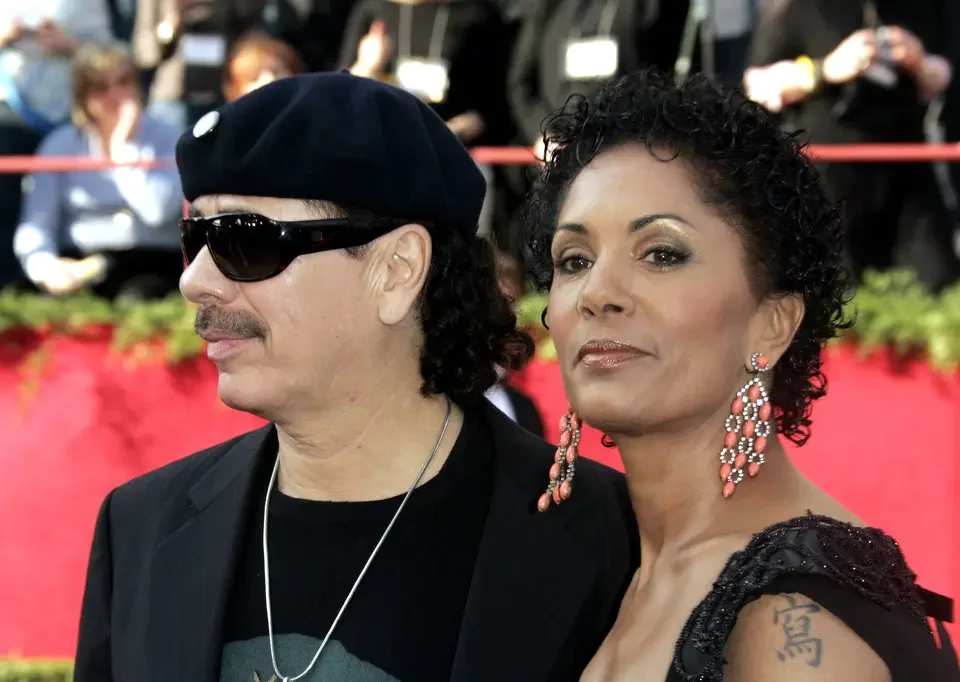
Carlos Santana, left, and Deborah King Santana during the 77th Annual Academy Awards at Kodak Theatre in Hollywood in Feb. 27, 2005.
Dan MacMedan/WireImage
In “Loving the Fire: Choosing Me, Finding Freedom,” Deborah Santana sets out to document the life she built for herself outside of her famous ex-husband — a story she says even her children may not fully know.
Her second memoir traces the path she has taken since her 2007 divorce from longtime business partner and superstar rock guitarist Carlos Santana, with whom she shares three children. It also chronicles her ongoing personal pursuit for spiritual solace and subsequent romance with actor Carl Lumbly.
More Information
Loving the Fire: Choosing Me, Finding Freedom
By Deborah Santana
(Broad Book Press; 220 pages; $30)In conversation with Deborah Santana: 4 p.m. Saturday, April 25. Free. Book Passage, 51 Tamal Vista Blvd., Corte Madera. www.bookpassage.com
Deborah Santana in conversation with Natalie Baszile: 2 p.m. Sunday, April 26. Free. Museum of the African Diaspora, 685 Mission St., S.F. www.moadsf.org
Writing candidly about what caused her to split from Carlos after 34 years together, Santana shares how his nine Grammy wins for his 2000 album “Supernatural” initiated a distance that would ultimately lead the couple to part.
“Carlos’s music was the center of our lives,” she reveals in the book. “Over the years, he had extramarital dalliances that were heartbreaking to me, eroding my confidence and making me feel unloved. After confrontations and arguments, he asked forgiveness and pledged not to stray, but my heart was always on alert.”
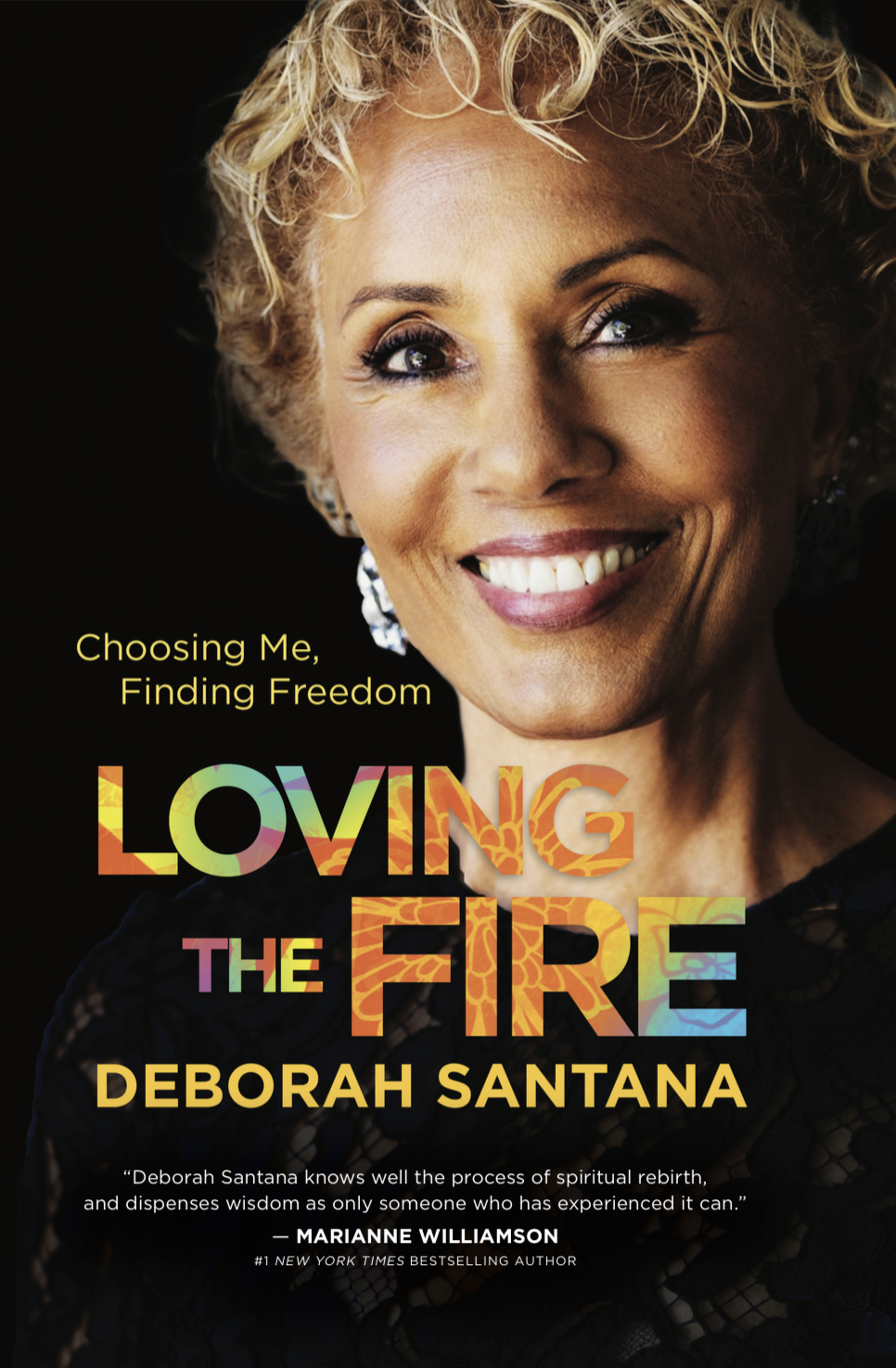
“Loving the Fire: Choosing Me, Finding Freedom” by Deborah Santana
Broad Book Press
Speaking with The Chronicle by phone from her Los Angeles apartment, where she splits her time between the Bay Area and Southern California, the bestselling author of 2006’s “Space Between the Stars” emphasized that this follow-up is all about defining herself on her own terms.
“I want my adult children, who I dearly love, to know all the things I've done with my life because I've always been an appendage to their dad,” Santana said. “Not in terms of our relationship, but in terms of him getting all the news. They know what's going on in his life, but do they know what I do?”
Ahead of a launch event to celebrate her new book, out Tuesday, April 21, Santana discussed the challenge of detailing her divorcee, working with Belva Davis to bring the Museum of the African Diaspora to San Francisco and much more.
This conversation has been edited for length and clarity.
Q: When your first memoir came out, you and Carlos were still together. Was it a challenge to detail your choice to get divorced in the new book?
A: I wanted to write a book about me now. I wanted to tell my story, but I was still married when “Space Between the Stars” was published, so I couldn't just pretend that I hadn't been married. I actually tried one version like that (with “Loving the Fire”), but all of my writing friends told me I couldn't do it that way. I had to include it, but I didn't want to dwell on it because it's the past.
I also didn't want to say negative things about Carlos. That was not my intention. We can tell negative stories about anybody, but that's not what I wanted to do. I wanted to say, “This is what happened.” I wanted to show a bit of why I needed to move forward with my own essence and my own dignity, then I wanted to go into what I've done since that time.
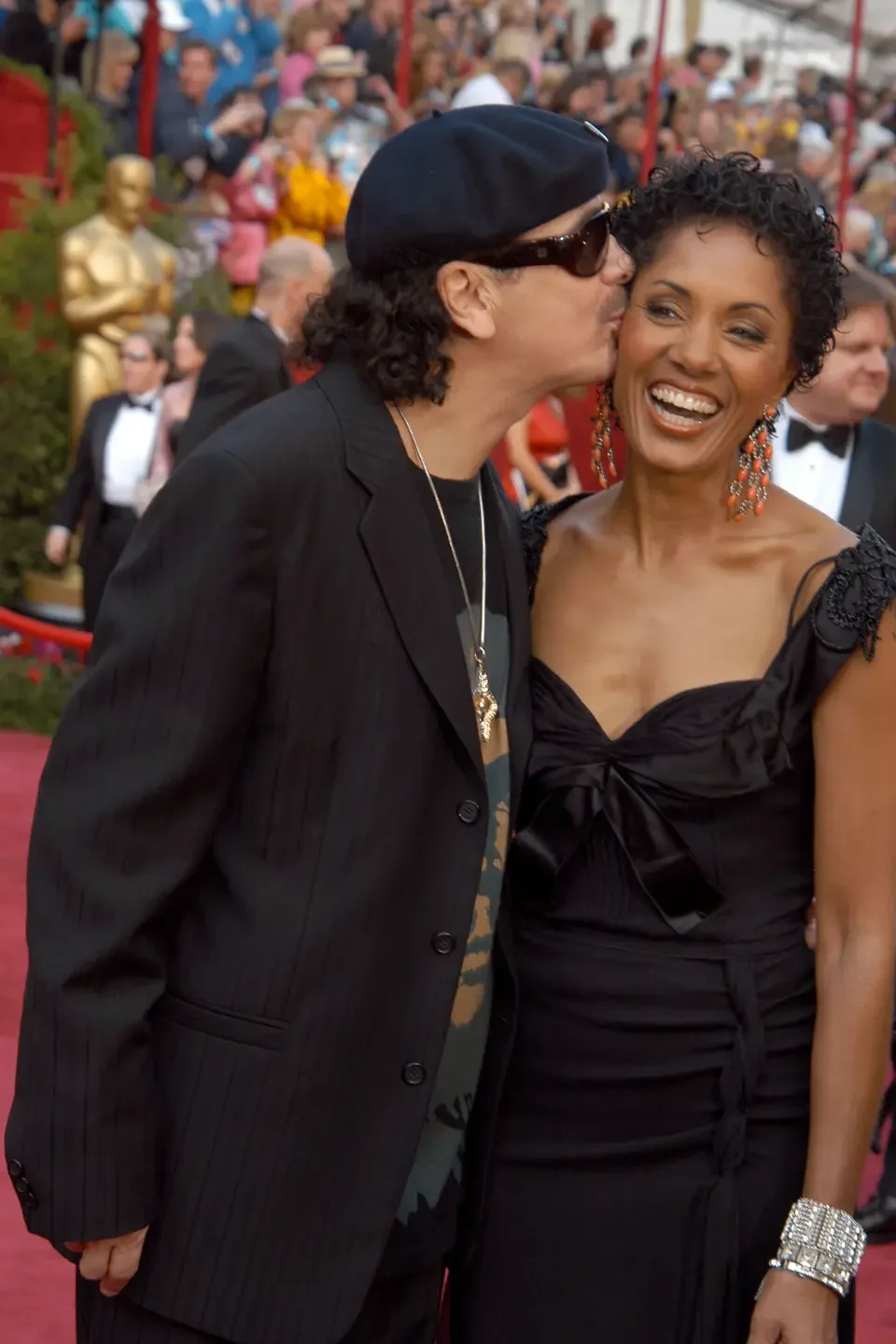
Carlos Santana, left, and Deborah King Santana during the 77th Annual Academy Awards at Kodak Theatre in Hollywood in Feb. 27, 2005.
Ron Galella/Ron Galella Collection via Getty
Q: At one point, you write: “The Houdini of the guitar had no more magic with which to escape my needs.” What gave you the confidence necessary to write about such a personal subject?
A: I have written many iterations of this memoir. There are parts that aren't in it that I wish were. And while there's nothing in it that I don't want to be there, there was certainly more to tell.
It's a difficult thing to shape a life story. I love the line you just read because people hold public figures in such high esteem. They hold them in a way where they're almost untouchable and I want people to know that we are all equal. Everyone has different gifts. Some people have phenomenal talents and yet they too, are human.
Q: Your new memoir includes cameo appearances from some truly remarkable figures. What has it meant to you to spend time with icons like the Dalai Lama, civil rights activist Belva Davis and former South African President Nelson Mandela?
A: I've been really fortunate.
It was so fabulous to work with Belva Davis when she was the president of the board at MoAD, and to be at the table with her and have her gavel us all to attention.
To sit at Mandela's feet was something I never expected, even after my work with Artists for a New South Africa. That was tremendously inspiring. He and (South African Anglican archbishop and Nobel Peace Prize laureate Desmond) Tutu both had this twinkle in their eyes, even after all they'd been through.
The same can be said of His Holiness, the Dalai Lama. Who am I to get to share the energy of these magnificent human beings? I'm just very grateful.
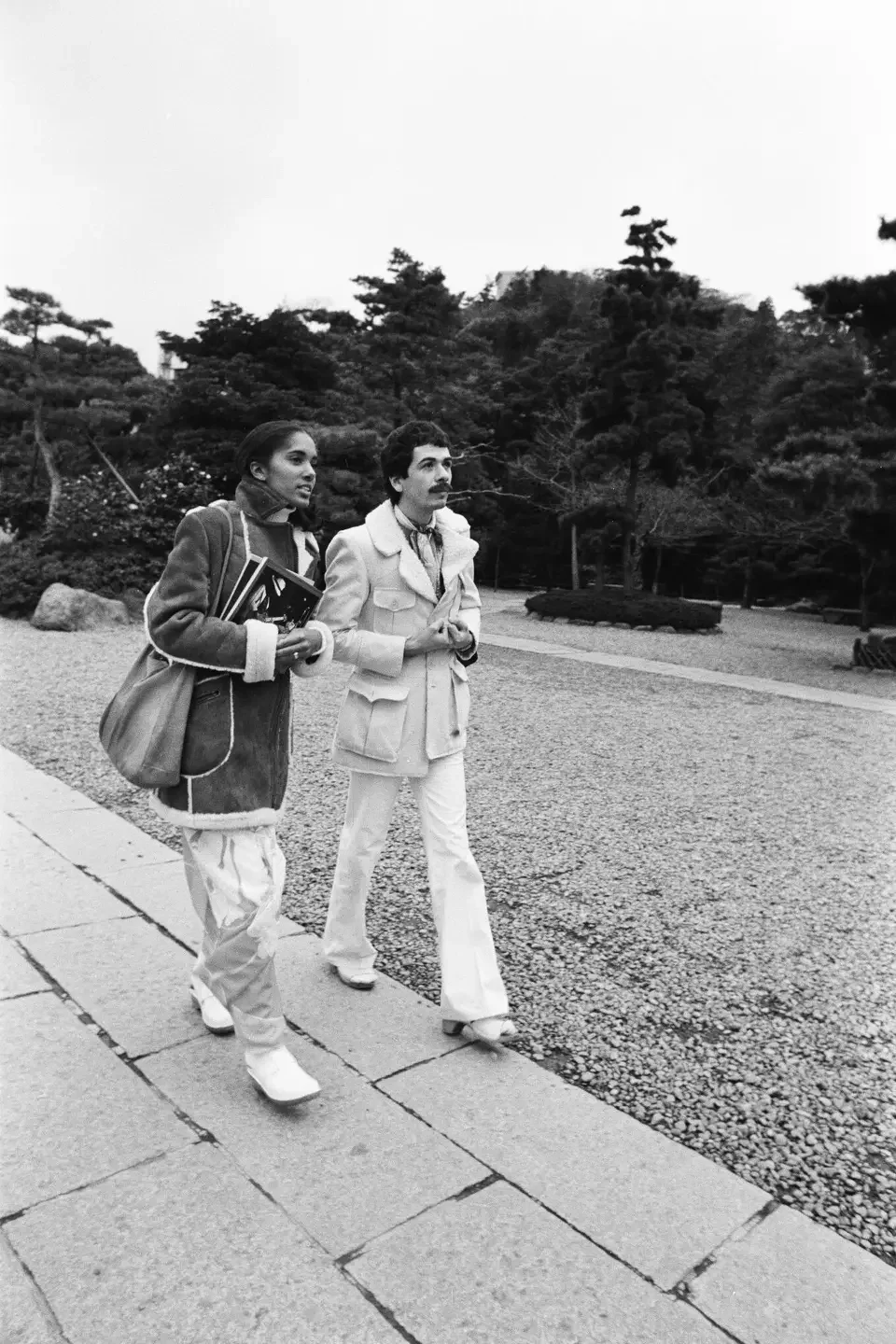
Deborah King Santana, left, and Carlos Santana visiting Kotoku-in Temple (Kamakura Great Buddha) on a day off during Sanatana’s second tour of Japan on Dec. 4, 1974.
Koh Hasebe/Shinko Music/Getty Images
Q: It was wonderful to read about the work you’ve done to help bring San Francisco’s MoAD and the Smithsonian’s National Museum of African American History and Culture to life. Given your memoir touches on how deeply you value the wisdom of your ancestors, what does it mean to you to be able to amplify Black voices via these institutions?
A: That’s exactly right. I really wanted to be involved with the NMAAHC as a tribute to my ancestors. That's what drove me to make that commitment.
As I write in my memoir, I was also so fortunate to work with Belva on MoAD. I remember walking through both museums wearing a hard hat before they opened. I love being on the ground level, creating new experiences.
Q: You also write very lovingly about your second marriage and divorce with “Cagney & Lacey” actor Carl Lumbly. Was it challenging to revisit that chapter in your life?
A: Carl is a phenomenal person. He's a wonderful human being and our relationship was magic.
When I met him, I'd just been married for 34 years and I'd only dated a couple of people so far. At that time, my relationship with myself was still evolving, and I felt it was important to put in both the good and the messy parts of my story.
It was a short union, but it was a lovely union.
Q: Your memoir documents your penchant for activism, going all the way back to your days protesting the Vietnam War at UC Berkeley's Sproul Plaza. You also detail your 2020 visit to Washington D.C. to take part in the Women's March. Do you feel activism is baked into your DNA?
A: I am an activist at heart. The Women's March was an amazing experience. I'm so grateful that my sister and I went. The ongoing No Kings rallies that are happening are also so important, because democracy depends on freedom of the people and the voices of the people.
I hope that everyone who cares about freedom for all will continue to march and to raise their voices and to fight for the rights of everyone.
Zack Ruskin is a freelance writer.
April 21, 2026
Zack Ruskin